Day four of our adventcha was baked right into our Spain itinerary, but it actually took us across the Strait of Gibraltar to Africa: Tangier, Morocco. Thanks to our travel-planner extraordinaire (Dave), we had a private guide, a roomy van, and half-day of fun and exploring.
This Coca-Cola is for You
Our tour guide was a gregarious, balding man in his 60s named Hasssan (HASS-uhn) with a very unusual accent. I think it was Portuguese with some Arabic influence—but it took me the better part of the morning to tune my ears to it. Hassan told us his nickname was ‘Coca-Cola’ and that he would be our bodyguard for the day. I don’t know if his nickname was legit or just part of his shtick, but as for my security needs, between us, if anything went down I think I’d still put my money on Dave for my security needs.
Hassan was clearly a ‘man-about-town’—every time we walked into a new place, he seemed to know someone. He was “the guy that knew the guys”.
Play on, player.
In the van, he spoke to us in loud, slow, theatrical English—full of pride in his town. Then, he would lean over and whisper to our driver in quick, clip Arabic. He warned us about aggressive vendors, kept an eye on our safety and advised us away from scams. And he made a point and made a point of opening doors and watching out for our comfort at every turn.
Tangier: Courted by Conquerors
Hassan talked a lot about the Berbers and Phoenicians and their influence on the city—but Tangier has had many waves of settlers and conquerors over the centuries. I suppose it is hard not to be fought over when you are a city as strategically located as Tangier—everyone wants to take you to the Prom. It doesn’t help that Gibraltar, another strategically significant port, has been sitting just across the Strait, blowing raspberries at Tangier for centuries.
I think the cultural influence timeline looks something like this:
- 10th century BCE — Phoenicians establish ‘Tingis’ (the ancient name for Tangier)
- 6th – 3rd century BCE — Carthaginians absorb Tangier
- 2nd century BCE — Rome defeats Carthage which allows the indigenous Berbers to take over
- 1st Century BCE – 5th Century CE — Roman Rule (et Tu, Rome?)
- 7th Century – 1400s — Islamic and Arab Rule
- 1471 – 1661 — Portuguese Occupation (yay for egg tarts and tour guide accents)
- 1661 – 1684 — British Occupation (this land was actually given as part of a dowry. #Colonialists)
- 1684 – 19th Century — Moroccan Reclamation
- 1923-1956 — International Zone governed collectively by multiple European powers and later the US (how very Austin Powers)
- 1956 – Present — Integration into modern Morocco
So, as you can see, there is a fairly eclectic cultural heritage to Tangier—one that makes it a city like no other.
Cape Spartel, the Albatross, and the Dove
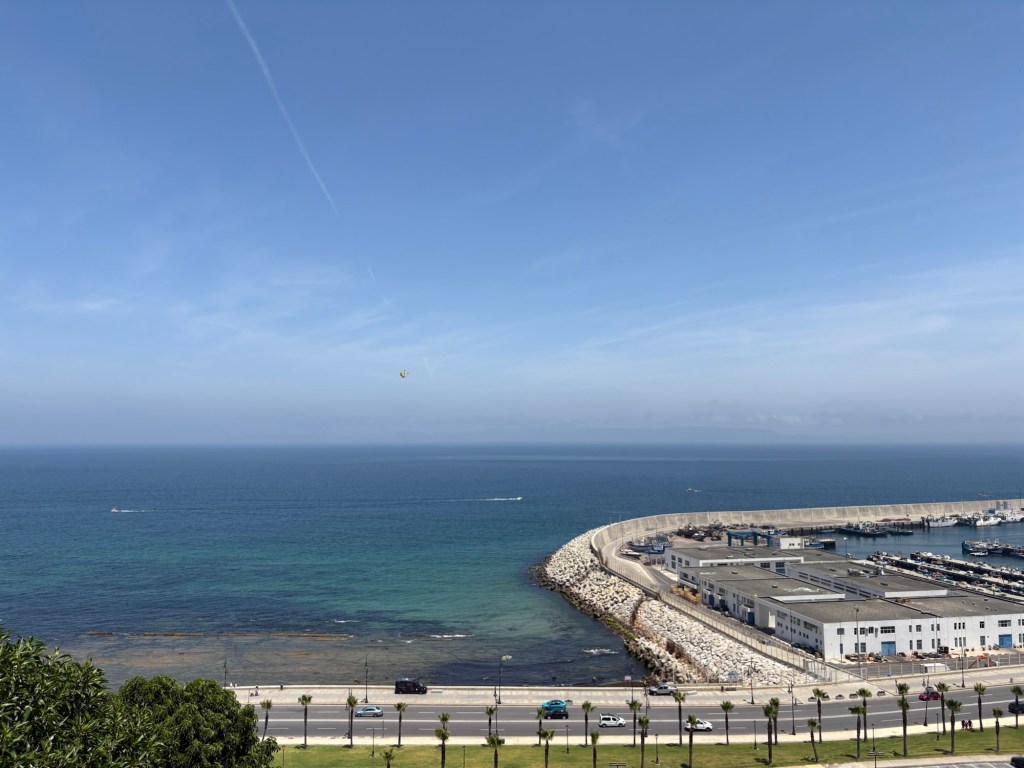
Next up was a stop at Cape Spartel to see the overlook, the Lighthouse, and the caves—and then a Camel ride for the boy (2.0).
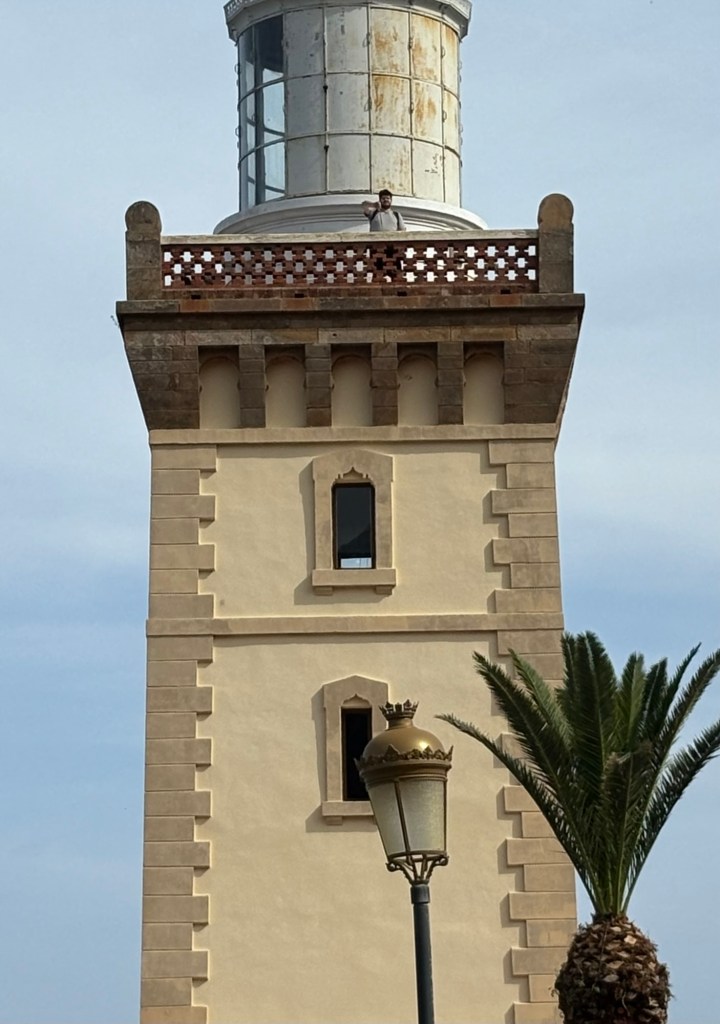

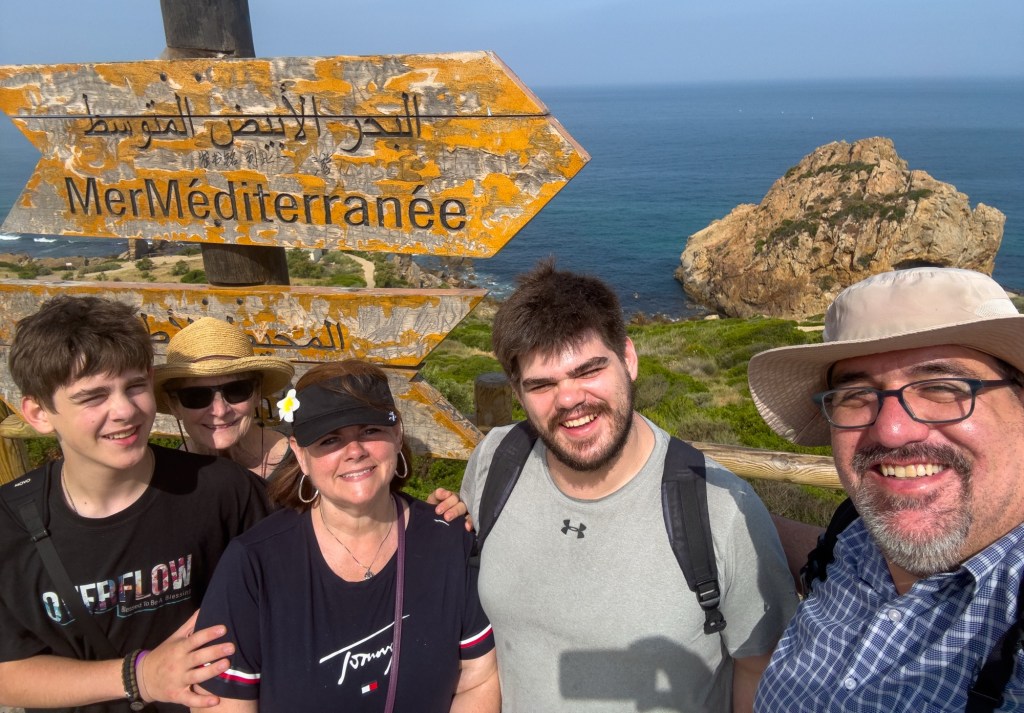
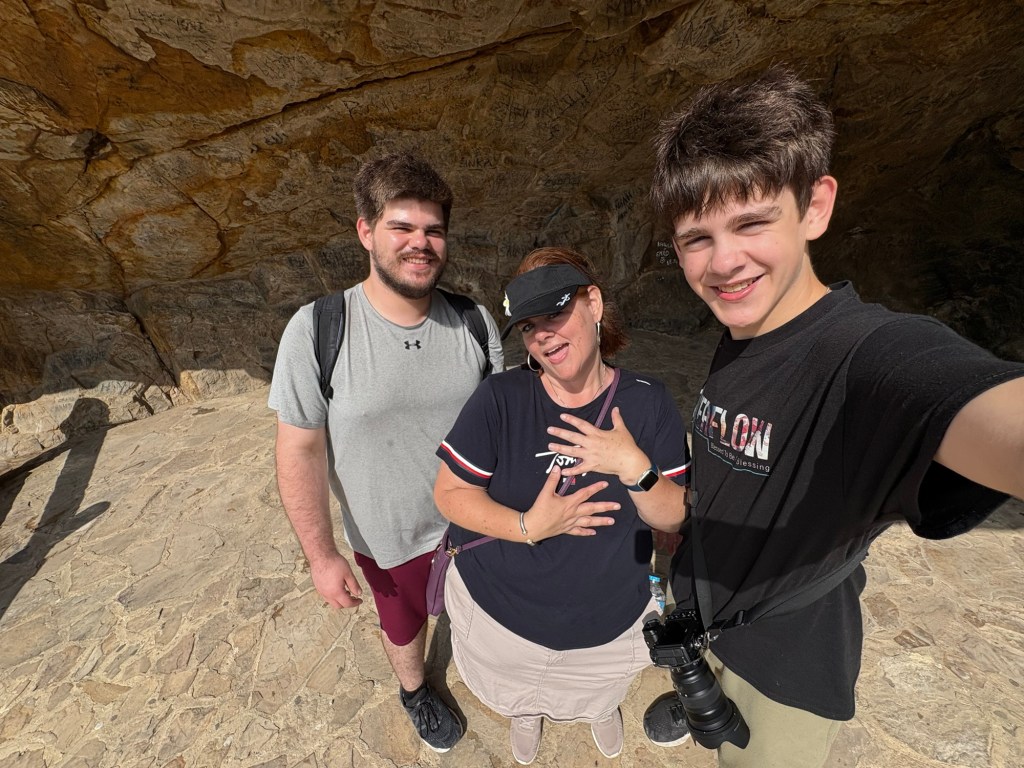

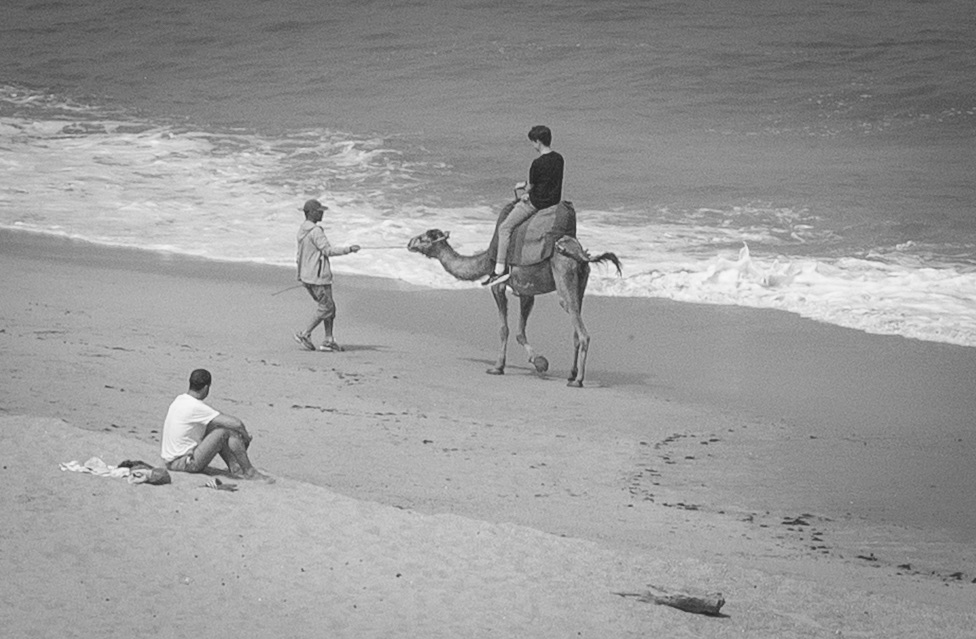
Alongside the fun at Cape Spartel, we began to feel a bit of a tug of war between our desire to be present with one another and something heavier. The details may be too layered and difficult for me to explain (I am not certain I fully understand them myself), but we, collectively, were on the struggle bus.
I suspect there were old family dysfunctions at play but with actors that changed for the better (thanks to Harry Pottress and Father Time). And some old behavior patterns seemed to be running on auto-pilot bumping up against those changes. And, there were definitely feelings, we did not know how to access much less name. Regardless, though we could not explain what was wrong with us, we knew that something was off and that we were struggling. So, it was here, at Cape Spartel, that we decided to step further into discomfort, name the tension, and open ourselves to some a little more vulnerability with one other.
It was uncomfortable and a little scary—but the reward was immediate and sweet. Just pointing out the albatross hanging from our collective necks seemed to release a giant breath we did not know we were holding. It was someone finally opened a window in a stuffy room— we exhaled. And, from that moment on, we were freer to relax and enjoy the rest of the day* with more ease and grace.
*Spoiler Alert: This tension may have eased for the day, but she was not done with us on this trip. You may see her again.
When Doves (make Rhonda) Cry
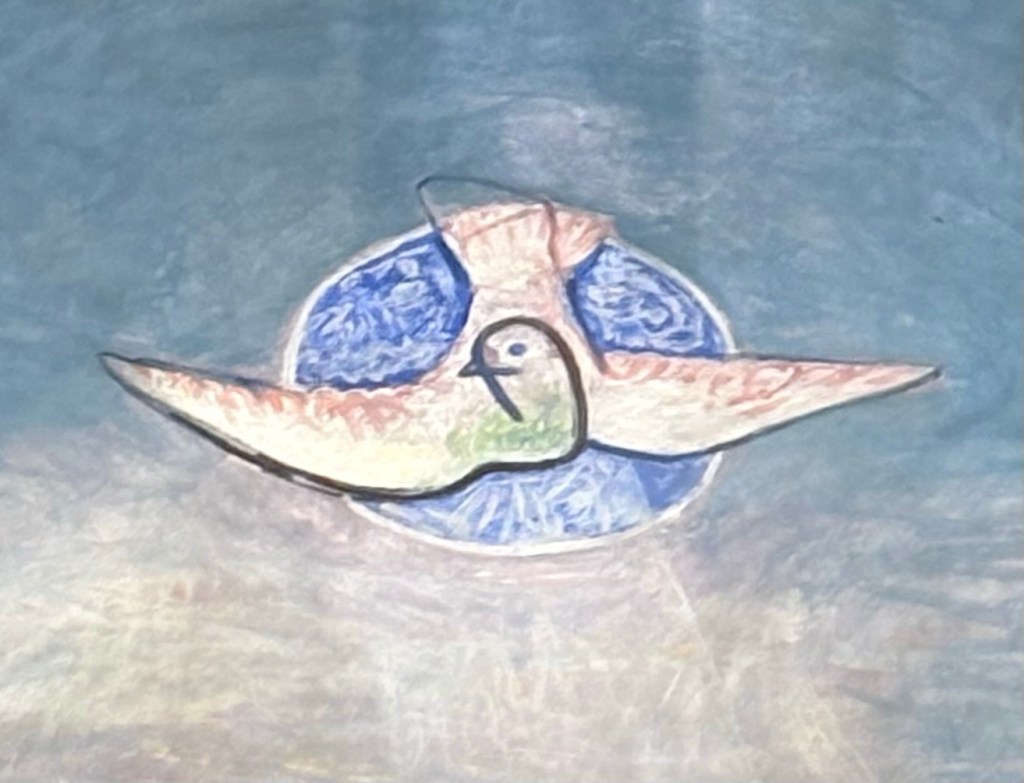
There was a moment after our discussion when I took a moment to soak up the peace. I was enjoying the calm, feeling gratitude, and taking in the space around me. Dave and his mom were sitting on a bench, connecting with each other, and I happened to glance just above their heads and saw a pair of white doves that decorated the tree stump behind them. And I cried.
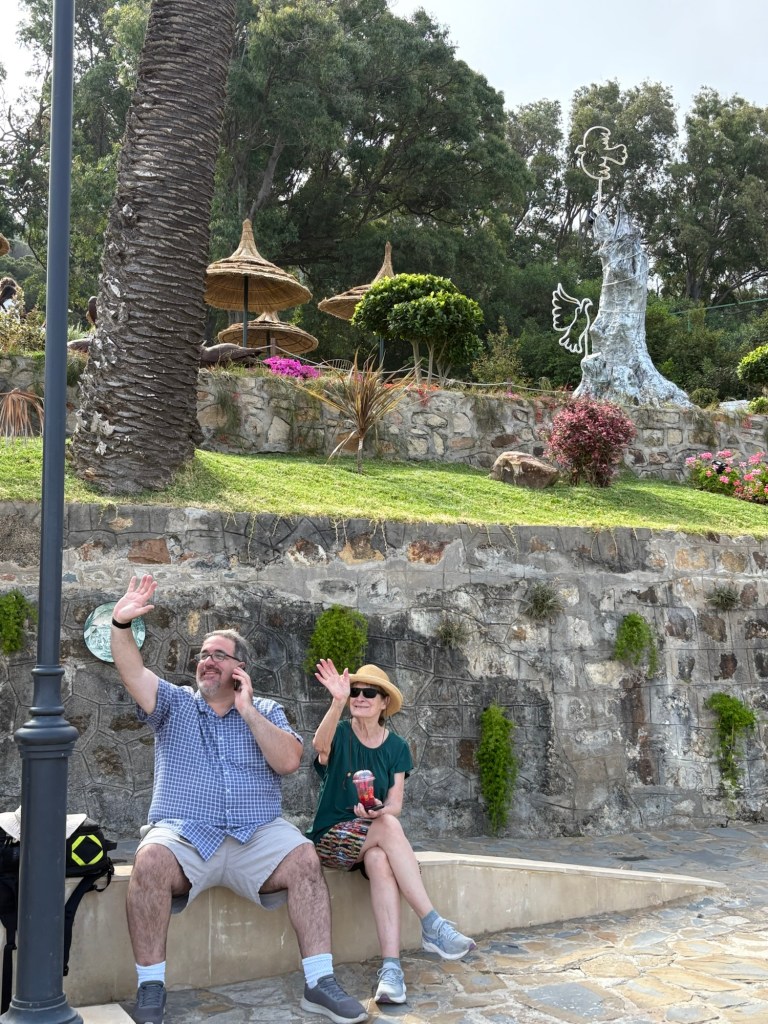
In my church group, we talk about recognizing when the Holy Spirit does something cool (we call them ‘God-Nods’). This one seemed impossible to miss.
Hercules! Hercules!
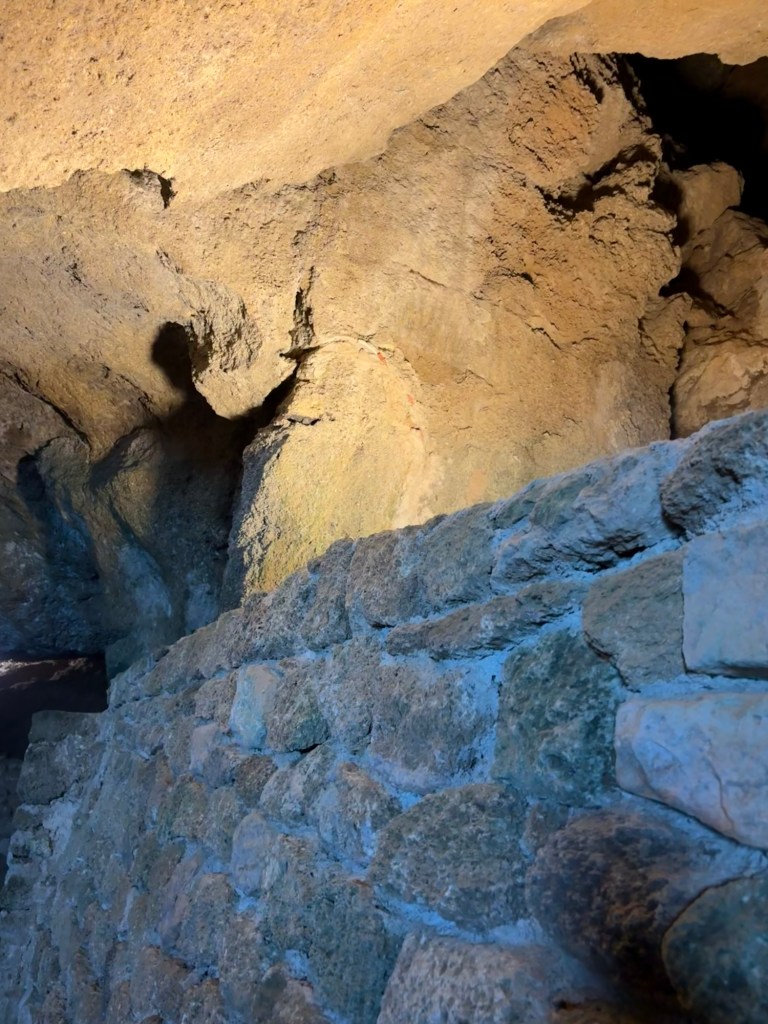
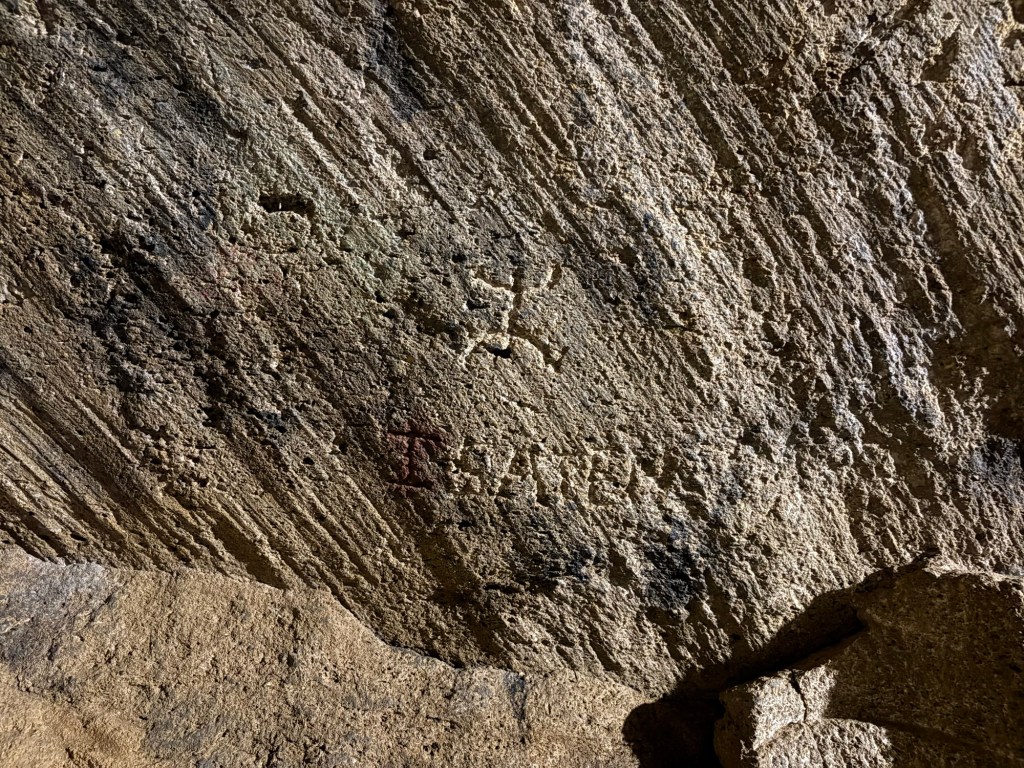
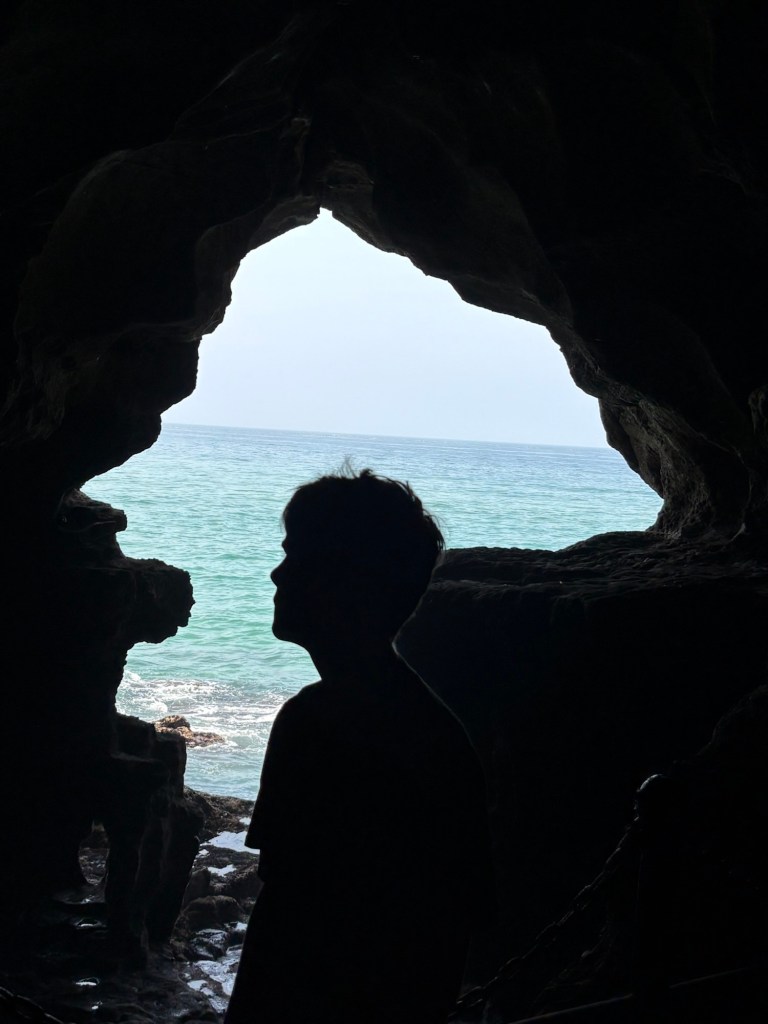
Next, Hassan introduced us to Mustafa to guide us through Hercules Cave. Mustafa seemed to know every square inch of it; his father had been a stone carver and his family played a role in excavating it. I must have looked particularly astonished or skeptical because, during his explanations, he kept saying “lady, believe me.”
His plea worked. His passion was so infectious that I hung on every word (even though, admittedly, there were a lot of repeated ones). Still, the man cared deeply about that cave, and it showed.
Mustafa also decided it would be best if we skipped the middleman and just handle all the photography himself. So he took my phone and became my personal documentarian for the rest of our time in the cave. all photos for on my behalf.
And now, may I present: Mustafa’s photos from Hercules Cave. Lady, believe me!


The meal that rocked the Kaspah
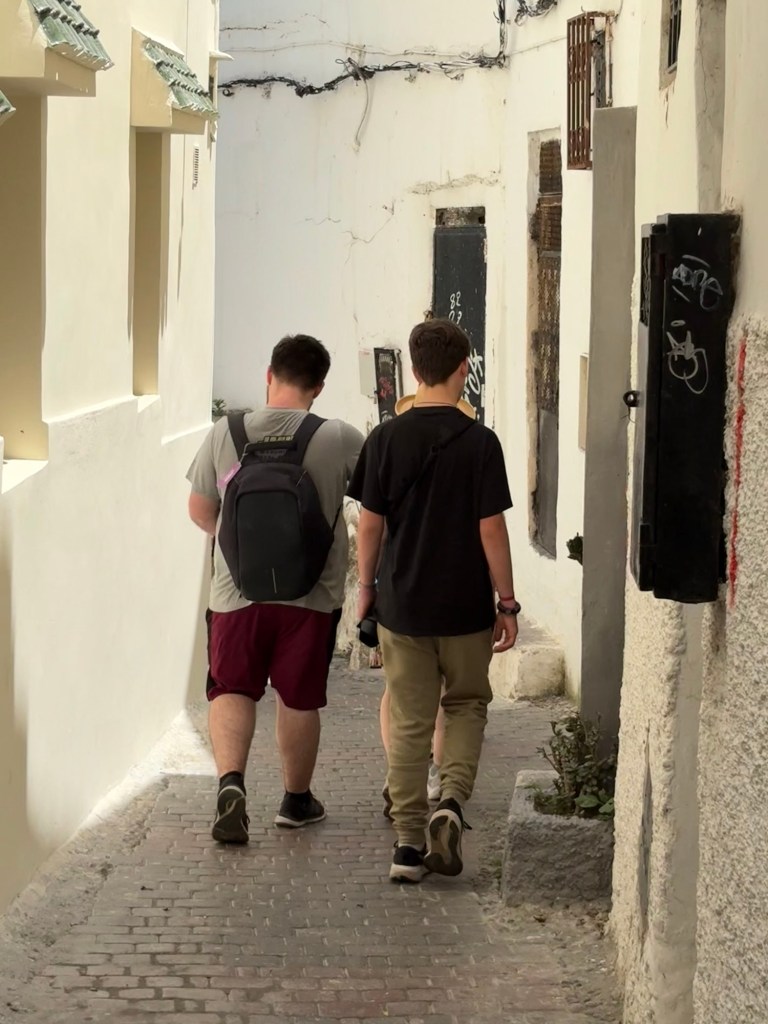
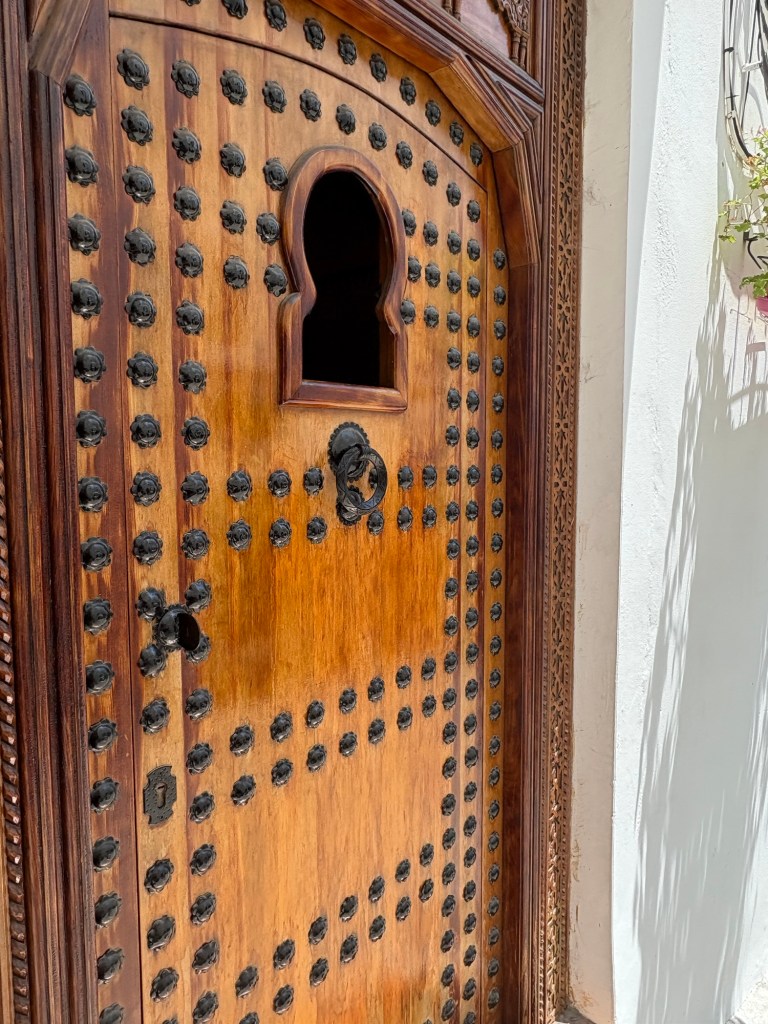
Our last stop in Tangier took us to the Medina—Hassan’s ‘hood’—where the number of “Sup Hassan!” greetings increased tenfold. It was really neat to see the old city and the Kasbah—and, yes, ‘that song’ was in our heads for the entirety of the time we were there.
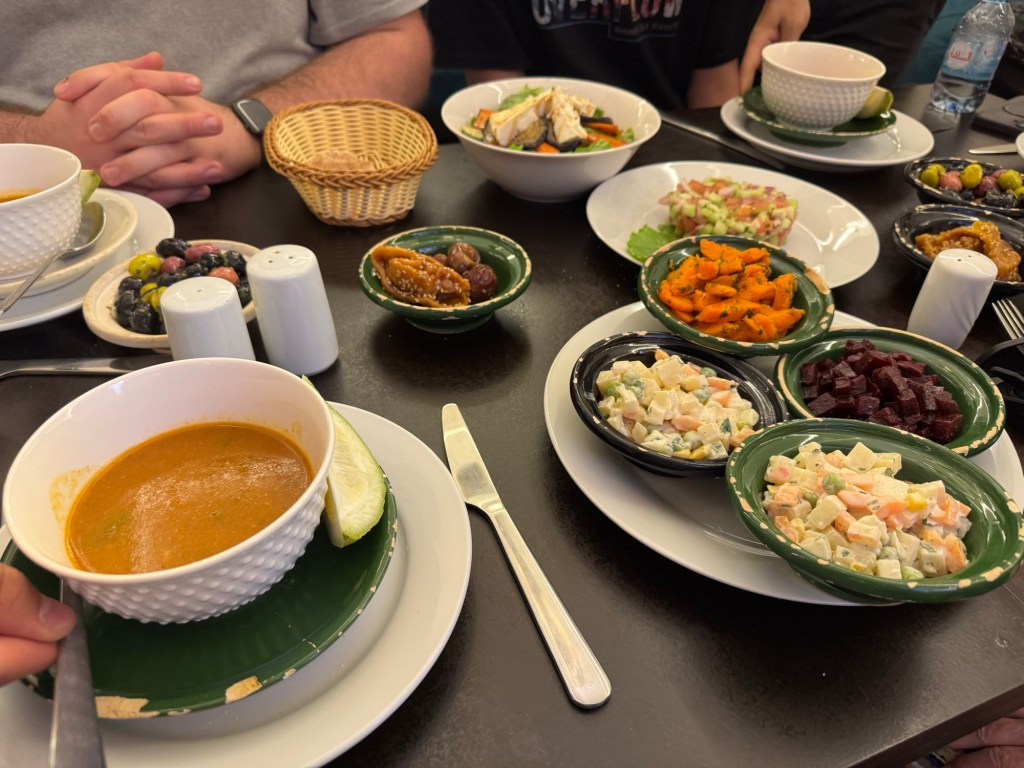
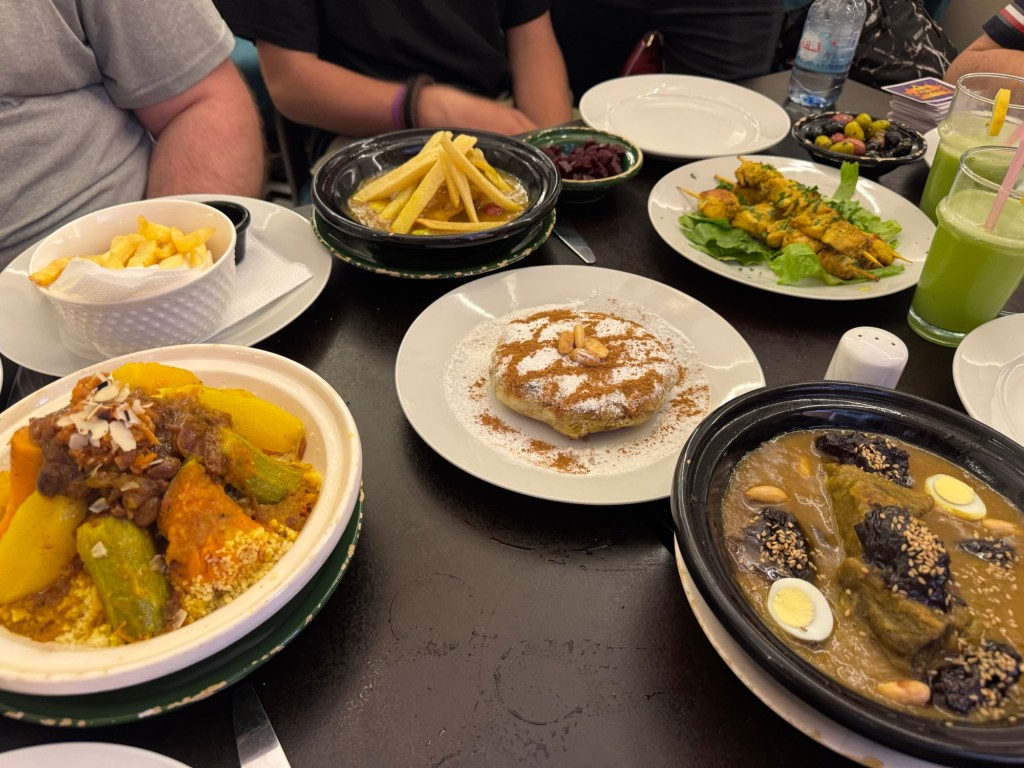
We had asked for authentic Moroccan food for lunch and Hassan really delivered—it may have been the best meal of the trip. Our restaurant served us 4 courses, family style: first bread and olives, then Moroccon salads and soups, followed by Tagine dishes and couscous, and finally a selection of cookies with Moroccan mint tea.
Side Note: The mint tea was poured with great flourish with the tea pot held high above the cup. Our server told us that if tea is poured from just above the cup, it’s a sign that your host does not like you. Noted!



An Invitation in the Carnage
After one full morning and afternoon and five very full tummies, we said goodbye to Hassan, took the ferry back to Tarifa to fetch our cars, and embarked upon the next leg of the journey to Ronda.
This segment was marked by two things: (1) our introduction to the stunning Spanish countryside and (2) the return of an old friend: ‘tension.’ Yes, tension was back—this time it took a seat between Dave and me testing our vacation patience (our: vacatience?). This one read from a familiar script: It was the one that looks like a misunderstanding that grew into frustration then snowballed into blame then hurt. A true classic. So, though the scenery was breathtaking, I missed most of it. Emotionally, I was elsewhere.
That beautiful drive ended in a very long evening at our hotel—and one that made me wonder if this trip was going to ever find its feet. I sat in my bitterness for quite a while. I even looked up ticketing options for an early flight home (yep).
But God drew me back to Dave—he always does.
I remembered what I recently learned: where there is turmoil and hurt there is often an invitation from God—if I can quiet myself long enough to listen for it and trust Him.
So. What was the invitation here?
Dave and I slogged through some tough work together trying to uncover the longings and disappointments beneath our tension. It was not easy—I did not show up as my best self in all parts of that conversation. Hurting has a way of diminishing our ability to show compassion toward others—maybe it is because we use it all up for ourselves. Maybe it’s just too painful to feel that vulnerable when we are hurting. But—prayer seems to be a fairly effective antidote. Praying with and for each other in the midst of an argument has a way of evening the playing field. It softens the edges; it humbles us and moves each of us from our perch of self-righteousness and nudges us back toward the center. Toward each other.
This time, it was Dave who made tbat move—he prayed while I sat in my pain tending to my wounds. His prayer revealed his heart and melted mine. Later, I understood the invitation: to remember to love boldly instead of being afraid (2 Tim 1:7)—to fight to understand my partner not just to be understood.
I guess the Dove was not done with us yet.


Ronda: You Beautiful Beast
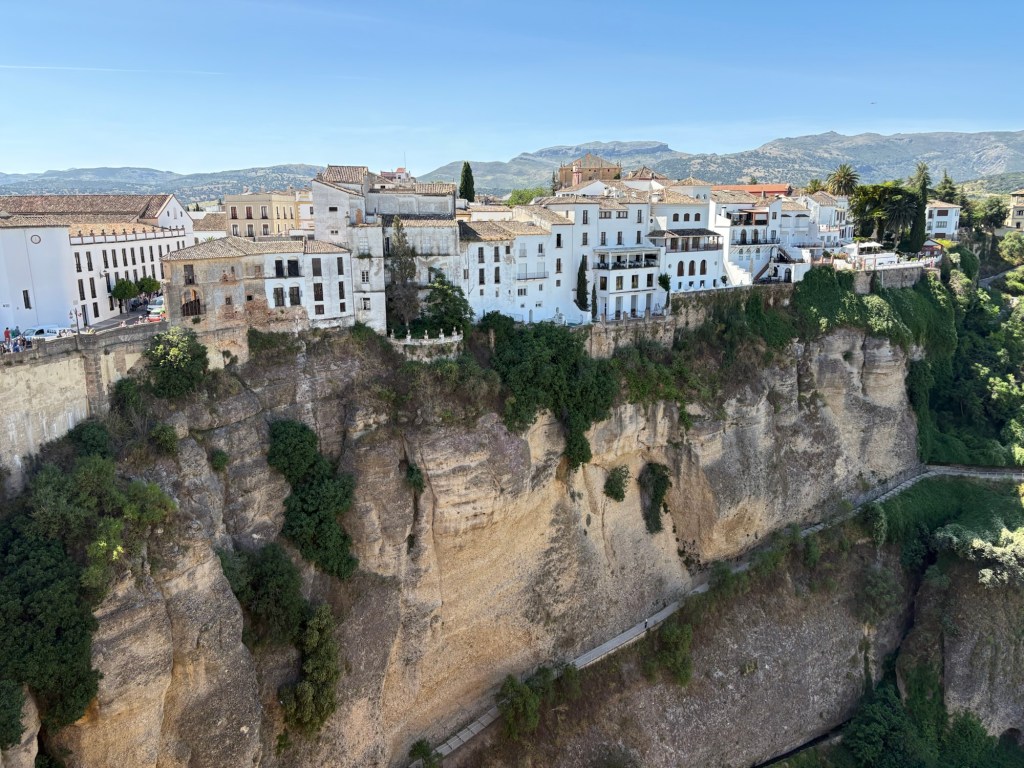
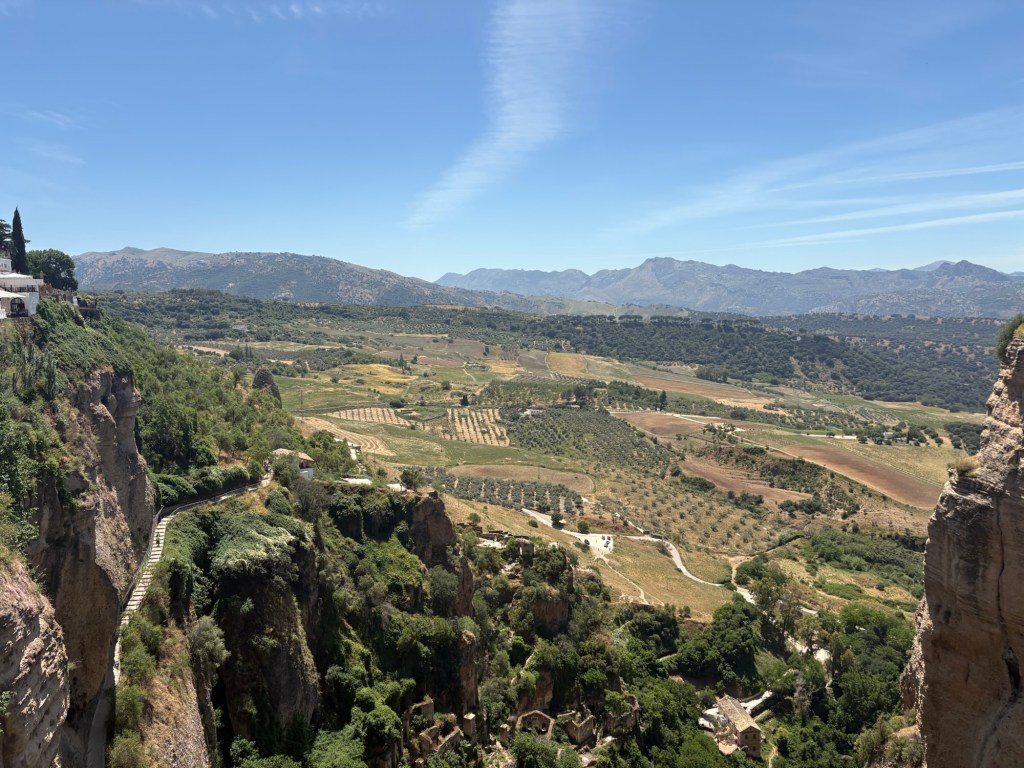
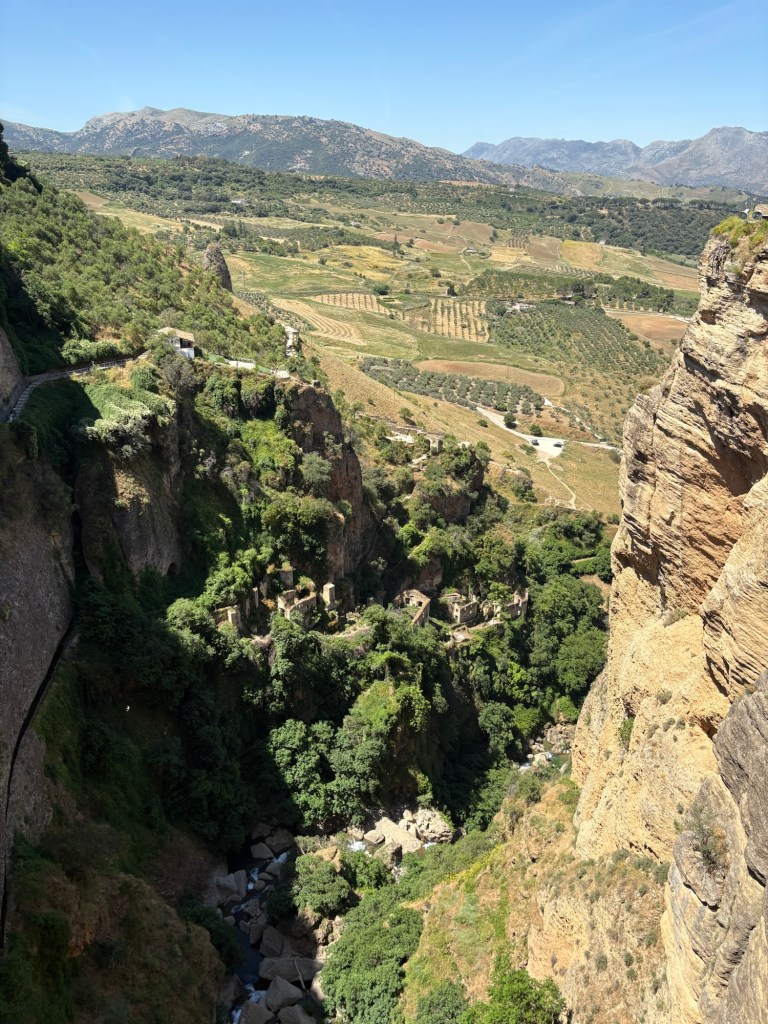
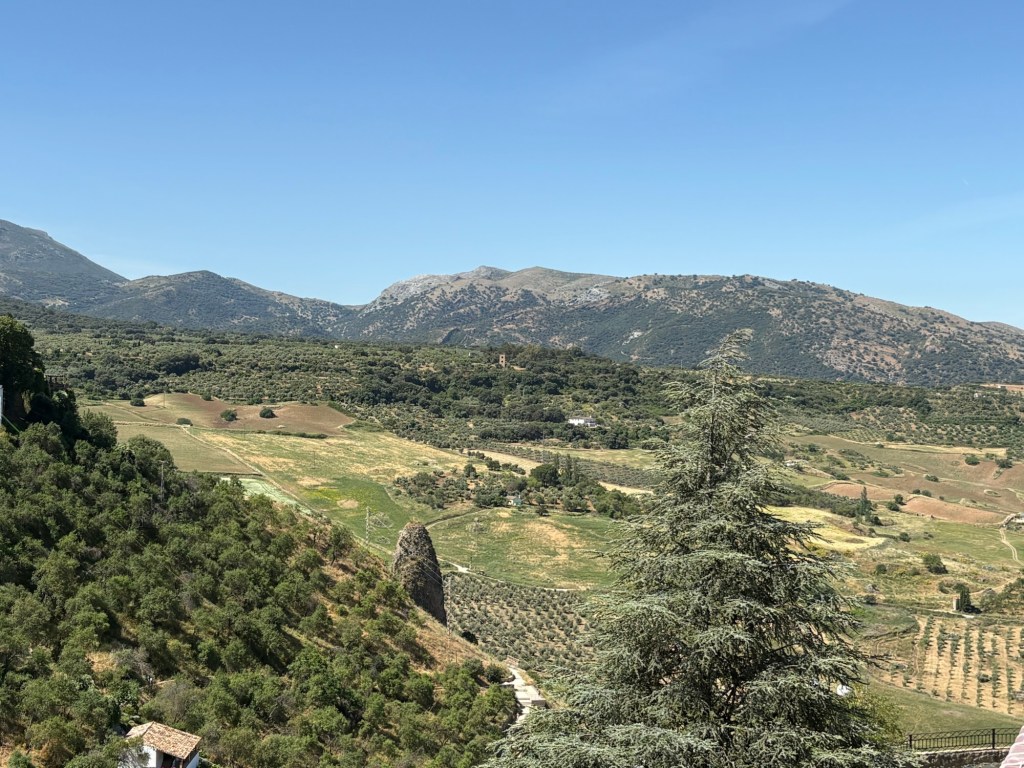
Ronda was one of the most beautiful towns I can remember traveling to—maybe ever. It was…absolutely breathtaking.
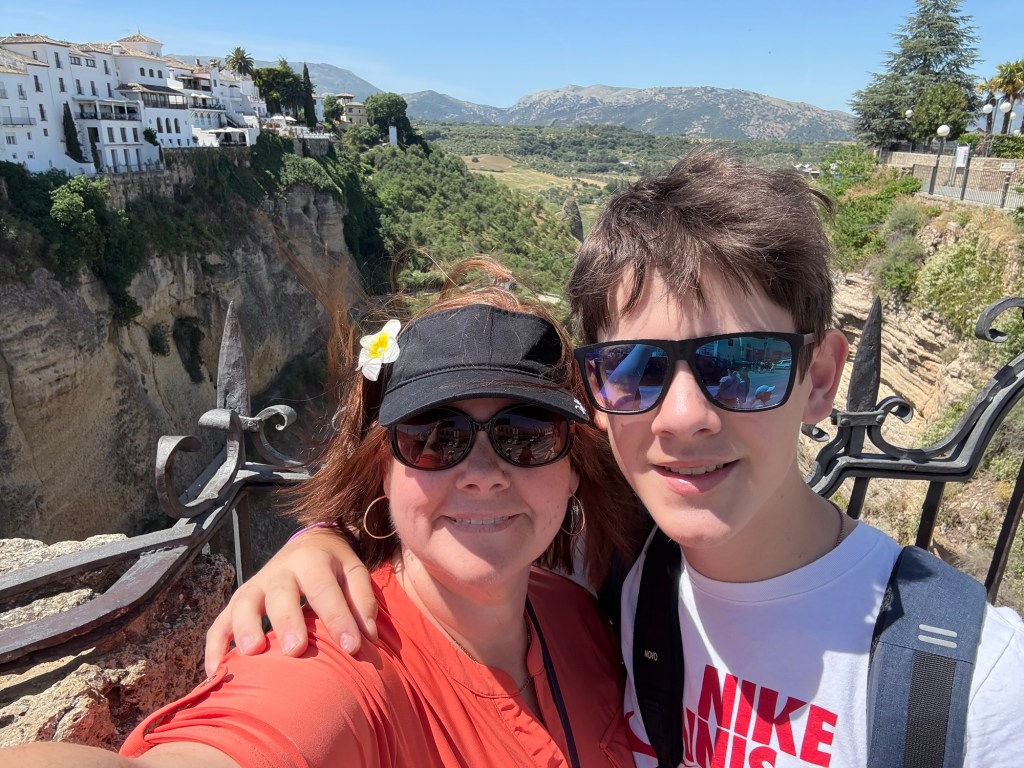
Built right on the ledge of a cliff, Ronda looks out over green, lush countryside. It’s both dramatic and serene, like someone who does not realize how beautiful they are. The view from the Puente Nuevo is unrivaled. I could have spent hours and hours just staring out at the loveliness it offered.
We wandered around through the town for a while just soaking it in. At one point, I paused to listen to a man plucking his guitar under his umbrella in the sun—and for a moment, it felt like I was in heaven.
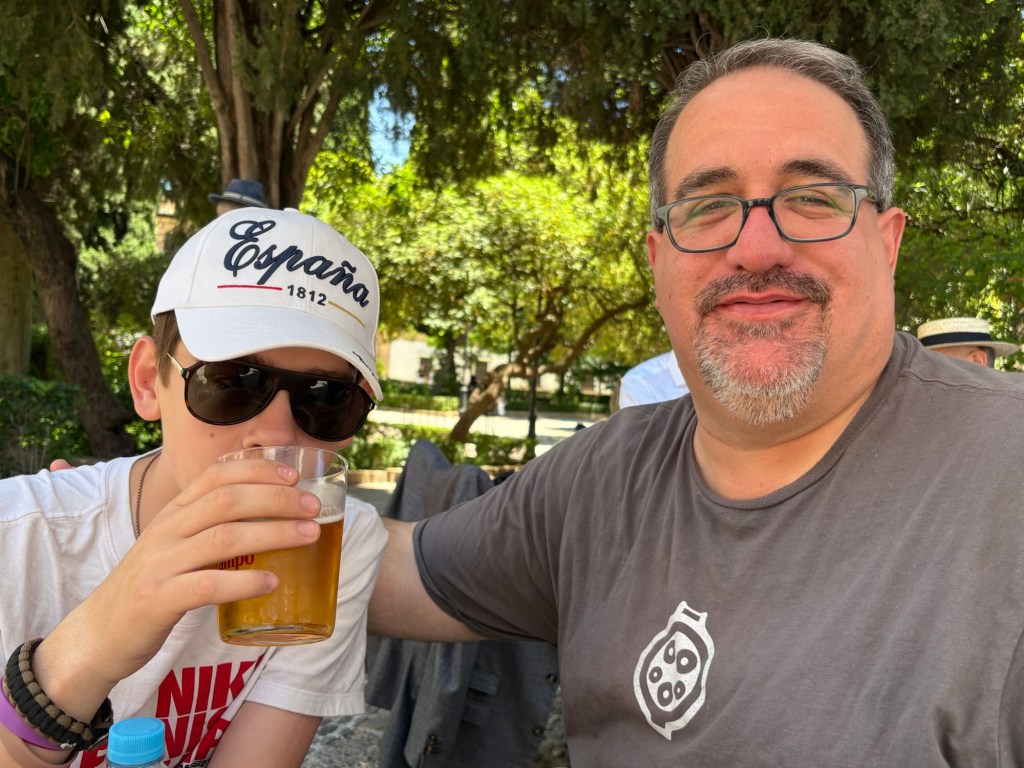
Then we had lunch at an outdoor café… and were serenaded by a different man playing a very out-of-tune guitar, singing with a very slow vibrato. That is when I knew—not heaven.


We also visited the Iglesia de Santa María la Mayor, a beautiful old church that added to the charm of the day. Dave accented our visit with a pair of the squeakiest dad-shoes I have ever heard. Every step echoed off the stone walls. It was hilarious.
I’ll leave you with a video compilation of the beauty of this city.
And I’ll follow it with an AI prompt I couldn’t resist:
If Ronda were a person, she would be…
Dramatic yet composed – She wears cliffs like earrings, bold and breathtaking, but never loud. Her drama is in her poise, not her volume.
Wise and weathered – With centuries of stories etched into her skin, she holds Roman ruins in one hand and Moorish palaces in the other, telling tales without saying a word.
Romantic to her core – A dreamer with a wild heart, she gazes into sunsets over deep gorges and writes poetry in silence. She inspires artists and lovers alike.
Mysterious – There’s always more to her than meets the eye. Beneath her beauty are shadows—bullfights, bandits, and secrets tucked in narrow alleys.
Independent and untamed – She lives on the edge—literally and metaphorically. Not easily reached, not easily forgotten.
Elegant with a touch of grit – Her lace is worn leather. Her perfume is orange blossoms and dust. She walks barefoot on cobblestones with the grace of a queen.
A bridge between worlds – She connects past and present, high and low, with that stunning Puente Nuevo—offering perspective to those willing to pause and look.




 The Squooshy
Leave a comment